
Introduction
Swimming involves a combination of different strokes, each designed for speed, endurance, or relaxation. Whether you’re swimming for fitness, competition, or recreation, learning the basic strokes is crucial. In this guide, we’ll explore the four main strokes: freestyle, backstroke, breaststroke, and butterfly.
1. Freestyle (Front Crawl)
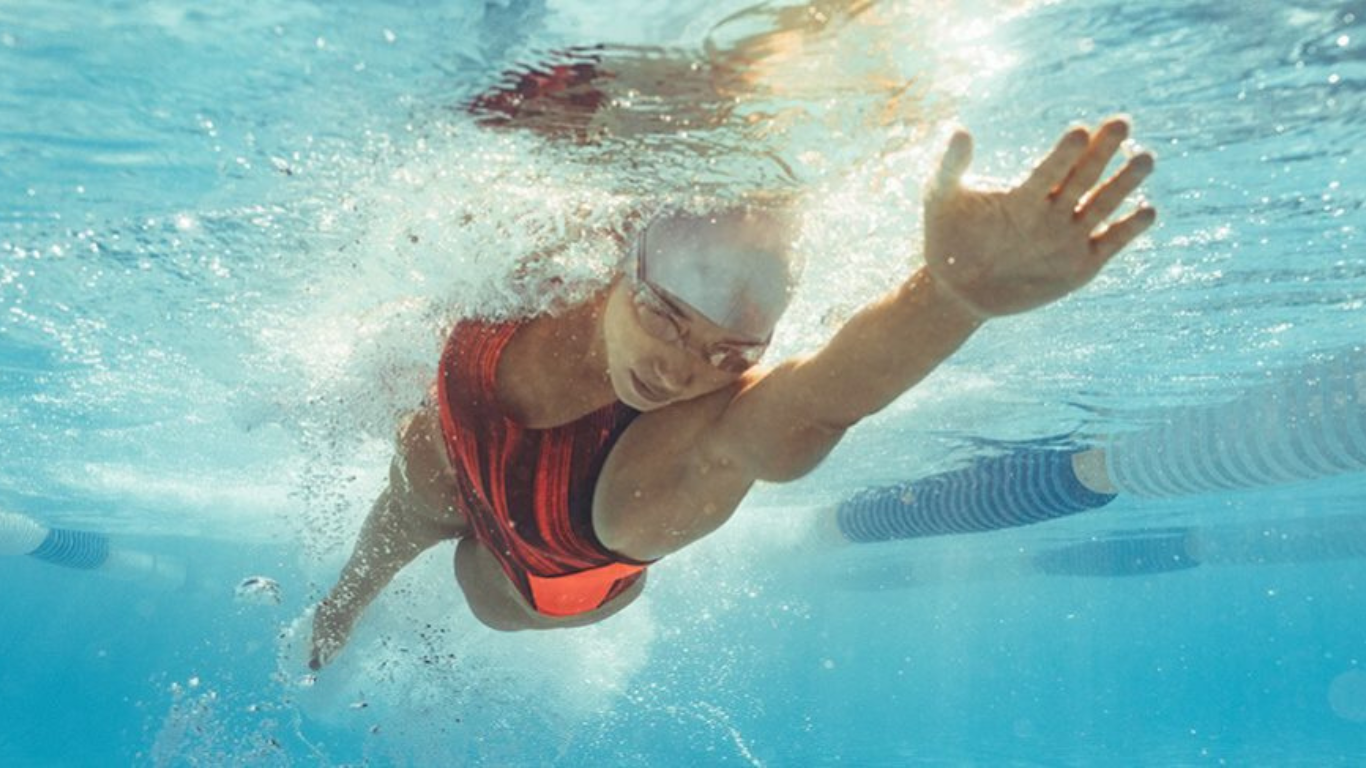
The freestyle stroke is the fastest and most commonly used stroke in competitive swimming. It provides excellent speed and efficiency.
How to Perform Freestyle
- Keep your body flat and horizontal in the water.
- Use a flutter kick (small, quick leg movements) for propulsion.
- Alternate your arm movements—one arm reaches forward while the other pulls back.
- Turn your head to the side for breathing without disrupting your rhythm.
Common Mistakes
- Lifting the head too high while breathing, which can disrupt body position.
- Not fully extending the arms, reducing efficiency.
2. Backstroke
Backstroke is the only stroke performed on the back, making it unique. It’s a great stroke for beginners as it allows for easy breathing.
How to Perform Backstroke
- Keep your body flat and straight.
- Perform a flutter kick while alternating arm movements in a circular motion.
- Keep your head still, looking straight up.
- Use the ceiling or sky as a visual guide to swim straight.
Common Mistakes
- Letting hips sink, which creates more drag.
- Over-rotating the shoulders, causing instability.
3. Breaststroke
Breaststroke is slower but excellent for endurance and relaxation. It’s widely used for recreational swimming.
How to Perform Breaststroke
- Keep your body horizontal, but slightly inclined forward.
- Perform a frog kick (bend knees, then extend legs outward).
- Move your arms in a circular sweeping motion.
- Take a breath when your head naturally rises out of the water.
Common Mistakes
- Pausing too long between strokes, reducing momentum.
- Kicking incorrectly (flutter kicks instead of frog kicks).
4. Butterfly Stroke
The butterfly is one of the most challenging strokes but also the most powerful. It requires strong coordination and upper body strength.
How to Perform Butterfly Stroke
- Keep your body in a wave-like motion.
- Perform a dolphin kick (both legs move together like a mermaid’s tail).
- Move both arms forward together, then pull them back simultaneously.
- Take a breath by lifting your head forward before re-entering the water.
Common Mistakes
- Overusing the arms instead of relying on the body’s wave motion.
- Taking too many breaths, which slows down the stroke.
Conclusion
Learning these four strokes will make you a versatile swimmer. Start with freestyle and breaststroke, then gradually work towards mastering backstroke and butterfly.